
Updated January 2026
Guide to the best compression socks for nurses
Nursing is an intensely physical profession that demands long hours of standing, walking, and rapid movement throughout hospital shifts. This sustained stress on the lower limbs can lead to leg fatigue, swelling (edema), discomfort, and circulatory strain, all of which are common complaints among nurses and healthcare professionals.
Compression socks for nurses are not just trendy accessories; they are backed by both science and user experiences. Standard compression socks show measurable improvements in leg comfort, circulation, edema prevention, and fatigue reduction when worn during work that requires prolonged standing.
In this article, we explore why compression socks matter, the benefits, and how to choose the best pair for long shifts in clinical settings.
Why Compression Socks Matter for Nurses
Improved Circulation and Venous Return
Compression socks work by applying graduated pressure; tightest at the ankle and gradually releasing up the calf, which helps push blood back toward the heart. This mechanism:
- Improves blood flow
- Reduces blood pooling in the lower legs
- Enhances delivery of oxygen and nutrients
By helping veins and tiny valves move blood more efficiently, compression socks reduce swelling and leg fatigue associated with long periods of standing.
Reduced Muscle Fatigue and Edema
A real-world study comparing individuals on 12-hour standing shifts showed that wearing 15–30 mmHg compression stockings significantly reduced leg muscle fatigue, edema (swelling), and discomfort compared to regular socks.
This is particularly relevant for nurses who spend most of their shift on their feet. Compression socks can help attenuate physiological leg stress accumulated throughout the day.
Evident Decrease in Discomfort
Research indicates that wearing compression stockings can suppress subjective sensations of leg discomfort, swelling, and perceived pain during periods of prolonged sitting or standing. A more comfortable leg experience with compression socks versus no compression is reported.
Evident Volume Reduction in Lower Extremities
Studies measuring leg volume after walking found that wearing below-knee graduated compression significantly reduced legs volume, a key indicator of fluid buildup (edema) and swelling. This suggests compression socks help prevent and manage fluid retention
Key Benefits of Compression Socks for Nurses
Encourages Healthy Circulation
Compression socks help increase venous blood flow, which supports oxygen delivery and reduces the likelihood of blood pooling in the legs.
Reduces Swelling and Occupational Edema
Evidence shows that wearing compression socks reduces swelling in people whose jobs involve prolonged standing, making a strong case for nurses to include them in daily workwear.
Lowers Muscle Fatigue and Discomfort
Compared to regular socks, compression wear significantly reduces muscle fatigue and discomfort after extended standing shifts, which aligns with the typical 8–12 hour nurse workday.
Improves Subjective Comfort and Wellness
Compression stockings may also support subjective comfort and physiological stress response. Increased parasympathetic nerve activity (linked to relaxation) and reduced discomfort is reported in some studies involving participants wore compression socks during seated tasks.
Potential Prevention of Chronic Leg Conditions
While more research is ongoing, compression socks have been used to prevent and manage varicose veins, swelling, and venous insufficiency across populations.
How Graduated Compression Technology Works
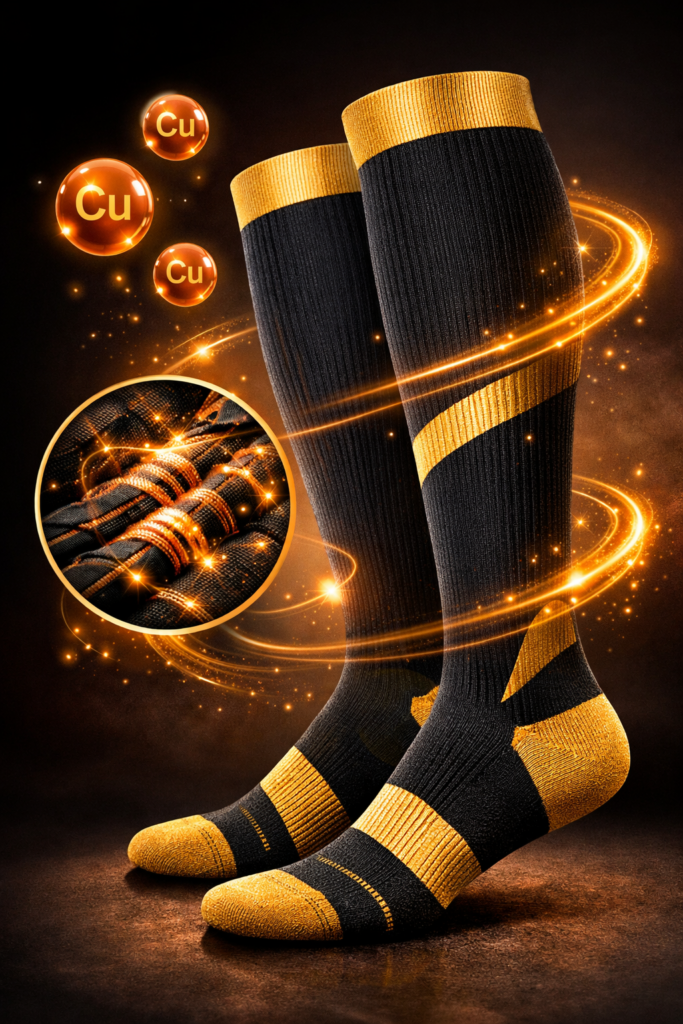
Compression socks are not all the same. The key feature nurses should look for is graduated compression: pressure is highest at the ankle and gradually reduces as you go up the leg.
This gradient helps promote venous blood return. Most nurses benefit from 15–30 mmHg of compression, a range that is effective for fatigue and edema reduction without being overly restrictive.
In addition to graduated compression, copper infused compression socks have the benefits of being light weigh and comfortable. The copper infusion also fights odors. The Nurscentric shop has high quality copper-infused compression socks in stock.
Nurses Experience with Compression Socks
From interaction with nurses, many have shared that compression socks:
- Make legs feel lighter and more energized after long shifts
- Help prevent ankle swelling by the end of the day
- Support muscle recovery after back-to-back shifts
These reported experiences by nurses align with the evidence highlighted above about improved circulation, reduced swelling, and decreased discomfort.
Choosing the Best Compression Socks
When selecting compression socks for nursing shifts, consider:
Compression Level (mmHg)
- 15–20 mmHg — mild support, good for general fatigue
- 20–30 mmHg — stronger support for prolonged standing shifts
Both levels have shown benefits, but many nurses prefer 20–30 mmHg for all-day pressure relief.
Material and breathability
Moisture-wicking and breathable fabrics keep feet dry and comfortable during fast-paced shifts.
Cushioning & Fit
Look for socks with cushioned footbeds and snug fit that does not pinch or bunch.
Professional Style
Discreet, sleek designs fit easily under scrubs without compromising a professional appearance.
Copper-Infused Compression Socks: A Smart Choice for Nurses
Copper infused light-weight compression socks are a healthcare essential. They offer support and comfort for healthcare professionals who spend long hours on their feet. By improving circulation and promoting better blood flow, these socks help reduce swelling, alleviate discomfort, and prevent issues like varicose veins.
Key Points on Compression Socks
Compression Socks Improve Circulation and Reduce Leg Fatigue
Research published in the Journal of Occupational Health found that wearing compression stockings during prolonged standing significantly reduced leg muscle fatigue and discomfort compared to regular socks. This is especially relevant for nurses working 8–12 hour shifts that require constant standing and walking.
Compression Therapy Reduces Swelling (Edema)
Multiple studies in vascular and occupational medicine demonstrate that graduated compression stockings reduce lower-leg swelling by improving venous blood return and preventing fluid accumulation in the ankles and calves. This is a common issue among nurses after long shifts.
Improved Venous Blood Flow During Movement
A study in the Journal of Vascular Surgery showed that elastic compression stockings improve venous hemodynamics during walking, meaning blood flows more efficiently back to the heart when compression is applied. This supports the use of compression socks for nurses who are frequently on the move.
Reduced Discomfort During Prolonged Standing or Sitting
Research in Ergonomics and Journal of Physiological Anthropology found that participants wearing compression stockings experienced less subjective leg discomfort and swelling during prolonged standing or sitting. Some studies also observed improved autonomic nervous system responses associated with comfort and reduced physiological stress.
Clinical Endorsement from Medical Authorities
Harvard Medical School and professional vascular health organizations recognize compression stockings as a non-invasive, preventive tool for managing leg fatigue, swelling, and venous strain—particularly for individuals who stand for long periods as part of their occupation.
Long-Term Vascular Health Support
Clinical guidelines from the Society for Vascular Surgery and the American Venous Forum support compression therapy as a cornerstone intervention for preventing and managing chronic venous insufficiency, varicose veins, and leg edema, conditions that nurses may be at higher risk for due to occupational demands.
Copper-Infused Compression Socks: A Smart Choice for Nurses
Copper infused light-weight compression socks are a healthcare essential. They offer support and comfort for healthcare professionals who spend long hours on their feet. By improving circulation and promoting better blood flow, these socks help reduce swelling, alleviate discomfort, and prevent issues like varicose veins.
Taking care of your legs to prevent and manage pain and soreness is part of self-care. As such, light-weight comfortable compression socks are a nurse’s essential. For more on self-care for nurses, explore self-care tips for nurses.
Comfort: The Key to Surviving Long Shifts
When it comes to comfort, the copper infused compression socks shine. Nurses work for long hours which can be physically taxing. Therefore, comfort is essential for productivity. Here is a specific nurse’s revelation of how these socks make a difference:
After 12 hours on the floor, the last thing I want is to deal with aching legs or sore feet. I’ve tried different compression socks before, but they either felt too tight or didn’t offer enough support. With these socks, the cushioned footbed provides that extra layer of softness. And, I never experience discomfort from chafing or sweating. They fit snugly without being overly tight, striking a perfect balance between support and comfort.
The breathable fabric helps keep your feet cool and dry. This is crucial in environments where you are constantly moving. Moisture-wicking technology ensures your feet do not feel damp after a long day.
Support: Graduated Compression for Optimal Circulation
One of the main benefits of the copper infused compression socks is the graduated compression technology. Compression is highest at the ankle and gradually lessens as you move up the leg. This design improves circulation and prevents blood from pooling, a common issue for anyone who stands for long periods. Take, for example, this nurse’s experience:
Before I started wearing compression socks, I would often end my shift with swollen ankles. After buying these socks and wearing them during my day and night shifts, I noticed some differences. The graduated compression feels supportive, especially around my calves, and by the end of the day, there’s significantly less swelling. It’s not just about immediate relief—it’s about preventing long-term issues like varicose veins and muscle fatigue.
The enhanced circulation also helps with muscle recovery. So even after long shifts, your legs feel less tired. This feature makes the socks particularly useful for night shifts or double shifts, where fatigue can build up quickly.
Takeaway Message
If you are a nurse or healthcare worker who spends long hours on your feet, the copper infused compression socks (or any other compression socks) are a must-have addition to your wardrobe. With a perfect blend of comfort, support, and style, they alleviate leg fatigue and improve circulation. They can help you get through even the most demanding shifts.
The graduated compression technology is a standout feature, reducing swelling and promoting muscle recovery. Moreover, cushioned foot-beds ensure comfort during long hours of walking and standing. Sleek design allows you to wear the compression socks discreetly under your scrubs without sacrificing professionalism.
While copper infused compression socks may be priced slightly higher than budget options, the durability and performance of the socks make them well worth the investment. Do not let leg fatigue slow you down. Give compression socks a try and experience the difference for yourself. Explore more on the copper infused compression socks here.